
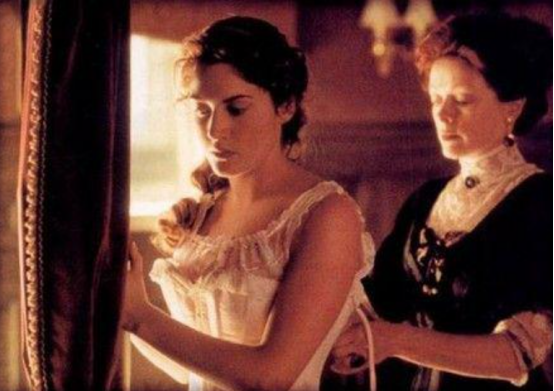
In film, one garment is nearly ubiquitous: the corset. Whether it’s the opulence of Marie Antoinette, the romantic tragedy of Titanic, or the pink fashion revolution of Barbie, the corset invariably appears discreetly on the bodies of female characters and at turning points in the story.
Some call it a “sign of sexiness,” others a “symbol of oppression.” But today, when we discuss “look” and “control,” the corset is more than just a relic of history; it’s a visual symbol of the body, power, and beauty.
So why do movie cameras still love black corsets so much? It’s probably because they convey a sense of “visual control.”
Camera preference: Corsets make the characters “more storytelling”
Film is a visual art form, and corsets are designed for visual storytelling. They accentuate the body’s contours, allowing viewers to instantly discern the character’s era, personality, and even mood. For example, the scene in Gone with the Wind where Scarlett O’Hara tightens her belt isn’t simply a matter of getting dressed; it’s a gesture of defiance against fate. She’s determined to survive, to regain control of her life. And the taut waistline symbolizes her resolve.
The corset intensifies the cinematic language of the film. Directors often use corsets because they allow female characters to “look like protagonists”—they are no longer background figures, but the center of emotion. This sense of “visual control” is not about objectifying women, but a narrative strategy: using form to express psychology.
From bondage to expression: Women are reclaiming the corset
In the past, corsets were a product of the male gaze, a way for women to “shape” their bodies.
But modern women are beginning to redefine them—corsets are no longer a constraint but a form of active expression.
Look at contemporary red carpets, music videos, and even street fashion—the black boning corset is making a comeback, not because it’s a “return to the past,” but because women are saying, “I choose my body shape.”
Wearing it isn’t about conforming to any standard but about emphasizing one’s own existence. It’s a visual sense of power, a signal that “I’m in control of the camera.”
In front of the camera, she is no longer a character being shaped, but the director herself.
This is precisely the new language born from the collision of modern fashion culture and feminist consciousness: the sense of visual control has transformed from the gaze of the other into the power of self-gaze.
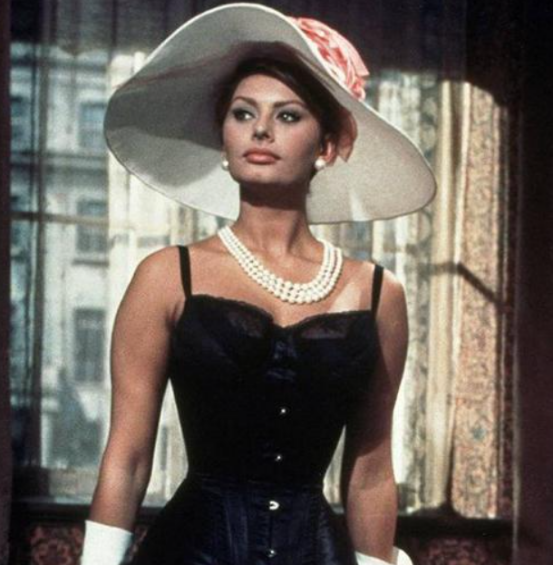
The Secret of Black: The Power Language of the Fishbone Corset
Of all colors, black best embodies power. It needs no embellishment, imbued with mystery, depth, and control. And when black meets a corset, this visual impact is amplified to its fullest.
The “fishbone” structure of the black boning corset emphasizes order and support—each bone acts as a visual boundary line, creating a balanced aesthetic of strength.
It tells the audience: this is not a display of “sexiness,” but a declaration of “self-control.”
Imagine this scene: light falls on black satin, the curves not soft, but firm; her posture is not defined, but chosen. This beauty inspires awe even in the camera itself.
That’s why the camera never really lets go of the corset—it allows the female characters to be both vulnerable and powerful, graceful and dangerous. This contrast is the kind of drama that movies love most.
Times have changed, but aesthetics have become more “precise”
Modern film and television works no longer pursue “sexiness for sexiness’s sake,” and the meaning of black corset is also changing.
Now, it’s more like a tool for “precise expression.” Directors or stylists design costumes based on the character’s psychology.
If a character is suppressing or struggling , the corset represents the tension in their emotions;
If a character is awakening or being reborn , the corset represents control and confidence;
If a character is seducing or resisting , the corset symbolizes initiative and power.
It has long since transcended mere clothing; it has become a “visual language of emotion.”
For real-life women, the cultural significance of the black corset is also evolving. For example, the now-popular black corset, designed with a focus on breathability, fit, and posture support, is no longer a tool for “holding breath,” but a fashionable piece that showcases curves and aura in everyday looks.
When you wear one, your posture naturally straightens, your shoulders relax, and that “control” isn’t forced, but rather an extension of your body’s confidence.
When corsets appear in everyday life: it’s not about retro style, it’s about attitude
Interestingly, more and more women are incorporating corset elements into their lives—pairing them with shirts, layering them under coats, or wearing them as tops.
This isn’t about imitating some kind of “classic sexiness,” but rather about using clothing to express “I define myself.”
Today’s corsets are lighter and more airy. Take this black corset with fishbone boning , for example. It uses flexible support strips and breathable fabric to balance shaping and comfort. It can make the waistline more defined without creating a constricting or oppressive feeling. Its existence is a fashion language—you don’t need to deliberately show it off, yet you can naturally exude an aura of “controlling the room.”
Wearing it isn’t about pleasing anyone, but about reminding yourself:
“I know who I am, and I know how I want to be seen.”
The sense of visual control is actually a psychological posture.
Many people think that “a sense of control” is external, but it’s actually more like an internal order. The reason film shots often use corsets is because they convey a visual sense of “stability”—lines are controlled, emotions are compressed, and rhythm is stretched. This visual language makes viewers more focused and more likely to empathize.
Similarly, the significance of women wearing corsets is no longer about being stared at by the outside world, but about finding their own rhythm.
Whether on the red carpet, on the stage, or in front of the mirror, the uprightness and elegance at that moment are a manifestation of “visual order.”
This is the true meaning of modern women wearing corsets:
a sense of control, not constraint, but the externalization of inner strength.
Does wearing a corset affect my health or breathing?
This is a question many people are concerned about. In fact, modern corsets are completely different from the “waist-cinching devices” of the past.
Older corsets could indeed cause body compression because they used rigid whalebone, metal strips, and other structures, sometimes even requiring assistance to tighten them. Modern versions, such as this black corset with fishbone boning , have been ergonomically optimized.
The fishbone support is made of a flexible material that can bend slightly with body movements;
Breathable fabric can avoid stuffiness and is suitable for long-term wear;
The elastic adjustment belt at the waist helps maintain the balance between comfort and body support.
The correct way to wear a bra is to breathe naturally and avoid excessive tightness. Beginners can start with short periods of wear and gradually adapt to changes in body posture.
In fact, many people find that moderate bra support can improve posture and reduce lower back fatigue from prolonged sitting.
Therefore , health and beauty are not contradictory — the key is to choose a design that understands the body.
The black boning corset perfectly embodies this concept, providing both support and respecting the body’s breathing space.
Summary : Gazing outside the lens is the beginning of self-appreciation
The story of the corset has never been about pleasing others but rather about being seen.
When the cinematic lens falls in love with the black corset, it’s actually in love with that very thing—controlled beauty, awakened power, and a redefined image of womanhood.
When we put it on, no longer to please anyone, but to bring order to our bodies and minds, at that moment, the camera may be on you.
Because beauty is no longer the result of being observed, but a process of self-control.